
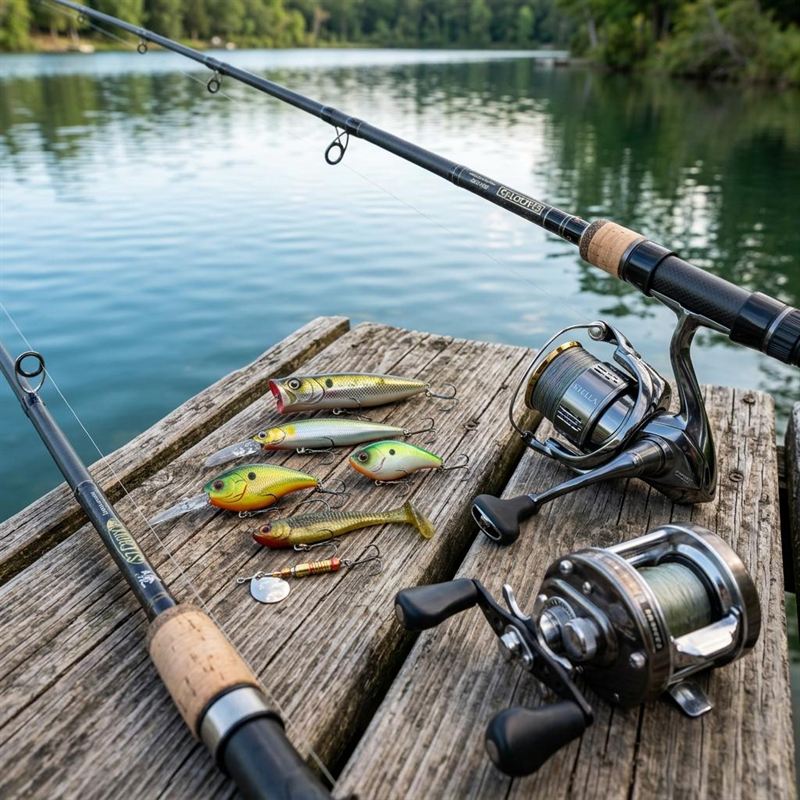
A fishing journal turns time beside the water into a record you can review later. Record the time spent trying, the tackle used and what you observed, alongside any catch. This gives you more context than the memory of one particularly successful day.
Use the same core fields every time
Date, start and finish time, general area, method and tackle make a practical starting point. Keep forecast information separate from what you actually observed. “Forecast wind” and “wind observed at the shore” describe different things. Naming the source makes the entry easier to interpret later.
Include trips without a catch
An outing without a catch still belongs in the journal. Comparing results without knowing the time spent can be misleading. A one-hour attempt from shore and a full day on a boat are different sessions. Leave missing details marked as unrecorded instead of filling them with guesses.
A simple fishing journal template
- Place and time: General area, date, start and finish.
- Method: Shore or boat, tackle and bait.
- Conditions: Observed weather, water appearance and any forecast source used.
- Outcome: Time spent, observations and recorded results.
- Next visit: One thing you would like to change.
Compare records with care
A few productive visits at the same time of day do not establish a reliable rule. Location, season, duration and method may all have changed. Use the journal to organise your experience and decide what to observe next, rather than treating a small set of entries as a guaranteed prediction.
Build a repeatable habit in Wildigo
Use Wildigo’s journal and saved points to keep your outing notes together. A short review after returning is easier than reconstructing details weeks later. Check who can see a saved location before sharing it. For a public post, a general area may provide enough context without revealing exact coordinates.
Does every entry need to be long?
No. Consistently completed fields can be more useful than lengthy entries that cannot be compared. Start with a small record you can finish after every outing, then add details when they answer a question you actually have.